Imagine This
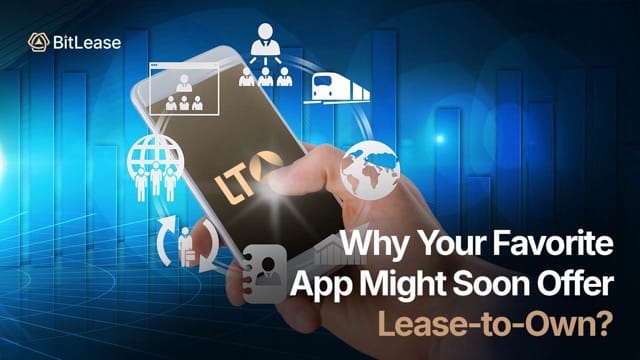
Imagine opening the exchange app you already use, the one where you check prices and occasionally make trades, and finding a new option alongside "Buy" and "Sell." An option that says something like "Own in Installments" or "Start Leasing." You tap it, and you are looking at a structured path to acquire Bitcoin or Ethereum through fixed monthly payments. No leverage. No collateral. No liquidation risk. Full economic benefit from day one. The experience lives inside the app you already trust, under the brand you already know.
That scenario is not hypothetical. It is what LTO-as-a-Service is designed to make possible. And understanding how it works reveals something important about where the digital asset industry is heading: toward a future where structured ownership is available everywhere, embedded natively in the platforms millions of people already use.
The Problem Platforms Are Facing
If you run a digital asset exchange, a wallet, a neobank, or a financial super-app, there is a problem that keeps getting harder to solve: how do you give your users a reason to stay?
The features that once differentiated platforms have become standard. Spot trading, staking, basic custody, fiat on-ramps: nearly every platform offers them, often built on the same underlying infrastructure. The order books connect to the same liquidity. The custody uses the same MPC providers. The staking delegates to the same validators. From the user's perspective, switching between platforms costs nothing because the experience is nearly identical.
Trading fees have been driven toward zero. User acquisition costs keep rising. Retention rates are declining. And the fundamental problem is that the relationship between the platform and the user is transactional. A user executes a trade, and the platform earns a fee. Then the user might not return for days or weeks. There is no structural reason for them to stay, because the next platform offers the same thing at the same price.
Platforms that want to thrive in this environment need to offer something that changes the nature of the relationship. Not a slightly better version of the same features. Something that creates long-term engagement. Something that keeps users active on the platform for months or years, not minutes.
Lease-to-Own is that product. An LTO contract is not a transaction. It is a contractual relationship that typically lasts 6 to 36 months. During that time, the user makes regular payments, tracks their ownership progress, earns staking rewards, and moves steadily toward full on-chain ownership. The engagement is structural, not incidental. And the user has a genuine reason to return to the platform regularly: their ownership path lives there.
An LTO contract is not a transaction. It is a relationship that lasts months or years. The user has a genuine reason to return to the platform regularly: their ownership path lives there.
What LTO-as-a-Service Actually Is
LTO-as-a-Service, or L2aaS, is BitLease's enterprise API suite. It allows any partner platform to offer Lease-to-Own and Portfolio LTO capabilities natively within their own application. The partner's interface stays intact. The partner's brand stays front and center. The user never leaves the partner's app or knows that BitLease is powering the experience behind the scenes.
But beneath the surface, the entire LTO infrastructure runs on BitLease. The contract engine that creates and manages LTO agreements. The HyperHedge solvency framework ensures every contract is backed. The MPC custody that holds locked assets. The compliance stack that handles KYC, AML, and sanctions screening. The settlement logic that processes installments, manages terminations, and transfers ownership. All of it operates through the API, invisible to the end user, visible only to the partner's engineering team.
Think of it as a white-label ownership engine. The partner provides the customer relationship and the interface. BitLease provides the financial architecture. The user gets a seamless experience that feels native to the platform they already trust.
What Partners Gain
For the partner platform, L2aaS creates value across several dimensions that address the commoditization challenge directly.
A new revenue stream. Every LTO contract activated through the partner's platform generates revenue through contract fees and execution spreads. This is recurring revenue tied to long-term contracts, not one-time transaction fees that depend on trading volume.
Structural user retention. A user with an active 12-month LTO contract has a reason to open the app regularly, make payments, check their ownership progress, and engage with the platform. This is fundamentally different from the transactional engagement of spot trading, where a user might execute a trade and not return for weeks.
A responsible finance product. As regulatory scrutiny intensifies globally, platforms that offer only leveraged trading face growing pressure. LTO provides a product that regulators view favorably: structured, transparent, non-collateralized, and consumer-protective. It gives the platform a story to tell about responsible innovation.
Inherited compliance. The partner does not need to build a separate compliance infrastructure for the LTO product. BitLease's regulatory positioning under VARA, MiCA, FCA, MAS, FinCEN, and FATF frameworks carries through the API integration. The partner inherits the compliance, not the burden.
Instant differentiation. In a market where every platform looks the same, offering structured digital asset ownership is a genuine differentiator. It is not a cosmetic change. It is a new product category that no competitor can replicate without building the same financial infrastructure from scratch.
You Choose How Much to Handle
One of the most practical aspects of L2aaS is how it handles compliance integration. Different partners have different levels of compliance maturity, and the system accommodates the full spectrum.
Partners with robust existing compliance infrastructure can perform their own KYC and KYB using their established systems. BitLease accepts the partner's compliance attestation, similar to how banks rely on correspondent banking relationships. The partner maintains control over their customer verification process and data.
Partners without a comprehensive compliance infrastructure, or who prefer not to manage compliance for the LTO product specifically, can route users through BitLease's onboarding flow. BitLease handles all identity verification, AML monitoring, and sanctions screening. The partner does not need to build or maintain any compliance capability for the LTO product.
This flexibility is deliberate. L2aaS is designed to work for early-stage fintech apps with minimal compliance resources and for fully licensed banks with comprehensive internal systems. The goal is to make integration possible regardless of where the partner stands on the compliance maturity spectrum.
Partners choose how much compliance to handle themselves. BitLease provides the flexibility to accommodate any level of maturity, from early-stage startups to fully licensed banks.
What Your Users Get on Day One
The initial integration is not a beta or a limited preview. It is a production-ready product that includes BTC and ETH LTO contracts, both Fixed and Optional LTO structures, the LTO Wallet with Locked and Free Asset states, the Unified Trading Account, HyperHedge solvency protection, Insurance Treasury coverage, and the complete compliance stack.
Users on the partner platform receive the same contractual protections, the same custody standards, and the same solvency guarantees as users on BitLease's own platform. There is no tier difference. No reduced protection. The experience is fully backed by the same institutional-grade infrastructure.
When the partner is ready to offer more, the LTO Pro upgrade adds Portfolio LTO for multi-asset management, dynamic risk bands that adjust to real-time conditions, upgraded insurance options, expanded API capabilities, including custom UI components, and multi-region compliance routing for partners operating across multiple jurisdictions. The migration path is incremental with no service interruption for existing users.
Who This Is Built For
The enterprise profile for L2aaS spans several categories, each with a distinct motivation but a shared need for something their users cannot get elsewhere.
Exchanges that have built their business on trading volume are discovering that trading alone does not create lasting user relationships. LTO gives their users a reason to engage with the platform over months and years, not minutes. It also provides a product that does not carry the regulatory risk of leveraged trading, which is under increasing scrutiny.
Wallet providers that currently offer custody and basic transfers can use LTO to evolve from a utility into a financial platform. Offering structured ownership through the same wallet where users already hold their assets is a natural extension that elevates the product and justifies premium positioning.
Neobanks that want to add digital asset products face a daunting infrastructure challenge: custody, compliance, trading engines, risk management. L2aaS provides all of this through a single API integration. The neobank offers the customer experience. BitLease provides the financial architecture.
Super-apps that already serve users across payments, messaging, and commerce can embed ownership as a new dimension. Imagine acquiring Bitcoin through the same app you use to pay for groceries or send money to a friend. LTO makes that possible without the super-app building any financial engineering internally.
And as the Real World Asset tokenization market grows, L2aaS provides the infrastructure to offer structured ownership of tokenized assets, from real estate to commodities, through the same framework that powers digital asset LTO, in jurisdictions where applicable.
Why This Matters Even If You Never Build a Platform
If you are a retail user, not a platform builder, you might wonder why an enterprise API is relevant to you. The answer is that L2aaS is the mechanism through which Lease-to-Own reaches the broadest possible audience, which includes you.
Every platform that integrates L2aaS makes structured ownership available to its existing user base. That means more people can access LTO without needing to discover BitLease directly. More users entering LTO contracts means more demand for institutional Lessor capital, which strengthens the capital side of the market and can lead to more competitive APR rates for everyone, including you.
Broader adoption also means stronger validation of the LTO model for regulators worldwide. Every established platform that integrates LTO demonstrates that the model is viable, compliant, and trusted by credible market participants. That regulatory validation benefits the entire ecosystem, including individual users whose contracts operate under the same framework.
And from a practical standpoint, L2aaS means you might encounter Lease-to-Own inside an app you already use. Your exchange, your wallet, your banking app. The structured ownership path that started as a new concept on a single platform becomes a feature embedded across the digital finance landscape. That is how financial infrastructure scales: not by acquiring every user directly, but by powering the platforms that already serve them.
Every platform that integrates LTO makes structured ownership available to its user base. More adoption means more capital, more competitive rates, and stronger regulatory validation, all of which benefit you directly.
The Flywheel
The strategic logic behind L2aaS creates a self-reinforcing cycle. When a new partner integrates the API, their users gain access to LTO. Those users activate contracts, which creates demand for institutional Lessor capital. More capital deployed into the system strengthens solvency and can improve pricing for all users. More successful contracts demonstrate to regulators that the model works. Regulatory validation makes it easier for the next partner to integrate, because the compliance and classification questions are already answered.
More partners bring more users. More users attract more capital. More capital enables more contracts. More contracts build more trust. And more trust brings more partners. The cycle compounds.
This is not the kind of growth that depends on marketing spend or token incentives. It is structural growth that compounds through utility. Each participant, whether a partner, a user, or an institutional Lessor, makes the system stronger for everyone else. The flywheel does not start with hype. It starts with architecture. And it accelerates through real adoption, real contracts, and real ownership.
That is the vision behind LTO-as-a-Service. Not a product feature. A scaling mechanism for a new kind of financial infrastructure. One where structured ownership is not available on a single platform but embedded across the digital economy, accessible to anyone, through the apps and platforms they already trust.
Explore Partnership Opportunities → www.bitlease.com