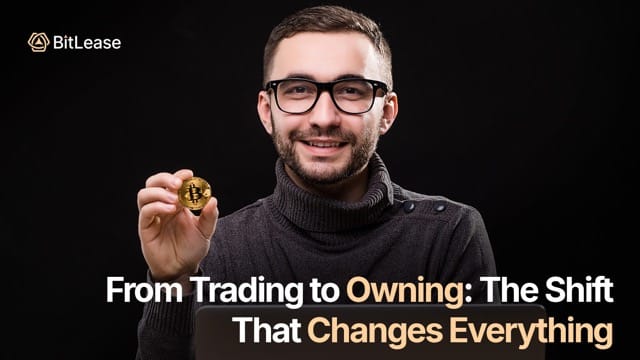
Most paths into digital finance force you into an uncomfortable corner. You must either commit your full capital upfront or enter a system built around collateral, leverage, and liquidation logic. For years, the market has favored speed and speculation. This environment turns what should be a straightforward financial decision into a volatile contest.
The second way is newer. It requires a different mindset entirely. You own your assets. You do not buy and hold passively while hoping for the best. You enter a clear agreement. You make defined payments over time. You benefit from the asset's value throughout the process. Finally, you achieve full legal ownership.
Your relationship with the asset becomes long-term and contractual. The outcome depends on your commitment, not on your timing.
These two approaches are not simply different products. They represent entirely different philosophies about what digital assets are for. One treats them as instruments for short-term positioning. The other treats them as assets worth owning through a structured, predictable path.
BitLease exists because the second approach did not have a platform until now.
The True Cost of Trading
Trading is often presented as highly accessible. You open an account, deposit funds, and start buying and selling. The interfaces look intuitive. The process feels fast. But what trading actually asks of you beneath the surface carries a high cost.
The Burden of Timing
Trading asks you to make constant timing decisions. You must decide when to enter and when to exit. You have to know when to hold through a downturn and when to cut your losses. Every one of these decisions requires either deep expertise or pure luck. The distinction between the two is rarely clear in the moment.
The Emotional Toll
Trading asks you to manage relentless emotional pressure. Markets move around the clock. Prices do not pause for sleep, for family events, or for moments when you step away. The psychological weight of an open position remains constant. The stress of active market participation directly affects decision quality and mental health.
The Asymmetric Risk
Trading asks you to accept asymmetric risk. In leveraged products, the downside can exceed your initial commitment. In collateralized positions, a sudden market drop can liquidate your entire holding. The risk falls entirely on you. The platform's risk management exists to protect the platform, not the user.
An Uneven Playing Field
Trading asks you to compete against professional traders with superior tools. You face algorithmic systems that react in milliseconds. You trade against market makers who profit from the spread between your buy and sell prices. The playing field is not level. The average retail participant operates at a structural disadvantage.
Trading serves a legitimate purpose in price discovery and liquidity. But it is not the only way to participate in digital assets. For most people, it is simply not the best way.
What Structured Ownership Asks of You
Structured ownership through Lease-to-Own asks something fundamentally different. It does not ask you to time the market. It does not ask you to monitor prices. It does not ask you to make rapid decisions under pressure.
It asks you to commit to a payment schedule. That is all.
You select an asset. You review the terms. You agree to a fixed installment plan. You make payments over weeks or months. When you finish, you own the asset outright. If the asset appreciates during that time, the appreciation belongs to you. If the asset has staking capability, the rewards flow to you. Your obligations never change based on market movements.
Lowering the Cognitive Load
The cognitive load drops dramatically. You do not need to check prices daily. You do not need to understand technical indicators. You only need to make a payment on schedule. This is a commitment most people already understand from everyday financial life. It mirrors how you handle rent, subscriptions, or car payments.
This accessibility is not a simplification that hides risk. It is a structural achievement. The complexity still exists, but it lives safely inside the platform's architecture.
The HyperHedge solvency framework manages market stability. The MPC custody model secures your assets at an institutional grade. You benefit from that security without needing to manage it yourself. The system handles the hard parts. You handle the payments.
Why the Industry Defaulted to Trading
If ownership is simpler and more accessible, why has the industry spent a decade building trading products?
The answer is partly historical. Digital assets emerged from a culture of technical sophistication and financial experimentation. Early participants were comfortable with trading. The first platforms were built to serve those specific users. As the market grew, new platforms simply copied what worked rather than questioning if it served a broader audience.
The answer is also economic. Trading generates fees on every transaction. A platform that facilitates high-frequency trading earns continuous revenue. This business model rewards transaction volume over long-term user outcomes. The platform benefits from users trading more, even when more trading harms the users.
Building a contract-based ownership system is fundamentally harder than building a trading engine. It requires a solvency architecture that does not depend on asset prices. It requires institutional capital markets and secure custody infrastructure. The engineering requirements are complex. That is why it was not built until now.
Defining a New Category
BitLease does not compete within the existing exchange category. We are defining a new one:
Structured digital asset ownership infrastructure.
This distinction explains why BitLease does not behave like a standard crypto platform. We do not optimize for trading volume. We do not celebrate volatility. We do not market speed or the excitement of price movement. We communicate with the calm, architectural clarity of a platform designed to help you build wealth over time.
Our brand pillars guide every decision we make. We choose structure over volatility. We view technology as trust. These are design constraints that shape our product architecture. We built a trust-centric financial brand for people who want to avoid trading chaos.
The Psychological Shift to Ownership
The shift from trading to ownership is both structural and psychological. The difference in how it feels makes it sustainable for real people over real timeframes.
Trading feels like a contest. You compete against the market and often against the platform itself. The emotional texture is intense. You feel excitement when you win and anxiety when you lose. The relationship with your assets remains adversarial.
Ownership feels like a partnership. You work with an asset over time. You contribute regular payments and watch your progress accumulate. The emotional texture is calm. You have clarity about what you owe and confidence in what you receive. You are building something lasting.
Who Structured Ownership Serves
The shift from trading to ownership is not for everyone. It is not designed for professional traders who thrive on volatility. It is not for people who view digital assets strictly as speculative instruments.
It is designed for people who want to own digital assets but feel excluded by the current system. It serves those who cannot afford to buy Bitcoin at full price upfront. It helps people who want a predictable path they can integrate into their daily financial lives.
It is designed for builders. It serves people whose time horizon is measured in years. It is for those who value clarity over excitement and structure over speed.
It also serves institutions. Many banks and corporate treasuries have watched the digital asset space from the outside. They could not participate because available products lacked proper governance and risk management. Structured ownership provides the exact framework they require.
The Future Belongs to Owners
The digital asset industry stands at a turning point. The first phase focused on building infrastructure. The second phase focused on speculation and trading. The third phase is about ownership. We are now using infrastructure to build structured, contract-based financial products that serve long-term needs.
BitLease is built for this third phase. The Lease-to-Own contract engine and institutional capital markets support a new reality. Digital assets are no longer just traded for quick gains. They are owned through disciplined, predictable, and transparent paths.
Structure turns access into ownership. The platforms that lead this new era will not generate the most volume. They will generate the most trust.
No noise. No speculation. Just a predictable path designed for long-term confidence.
Start Your Path →www.bitlease.com